Classic Pool 3D: 8 Ball
- 3.8
- Rating
- 10.00M
- Installs
- Free
- Price
 Analysis by App-foxy
I approached Classic Pool 3D: 8 Ball as the kind of game you open when you want a quick round of pool without setting up a table or learning a complicated control system. It is a free sports game from C.C.T Games, built around a familiar 3D pool experience and aimed at players who already understand the basic idea of lining up a shot, choosing power, and planning the next ball.
That familiarity is its biggest advantage, but it also creates the first important expectation: this is better suited to casual digital play than to someone looking for a complete replacement for a serious pool simulator. I found the appeal in its immediate format. You can pick it up, take a few shots, and decide quickly whether the controls feel comfortable. The game has reached over ten million installs and carries an average rating of 3.7 from around nineteen thousand ratings, which suggests a broad audience but also a mixed experience rather than universal approval.
Getting started without turning a quick game into a troubleshooting session
Before opening the table, I like to make a quick check that saves more time than it takes: confirm the device meets the Android requirement, close anything likely to interrupt play, and give the screen a clean, dry surface for aiming. I also keep the first session deliberately short, so I can tell whether a rough start comes from the controls or the device setup. From there, the next useful question is where a new player is most likely to get stuck.
You May Also Like

 Google Keep - Notes and lists
Google Keep’s Quiet Growth Shows the Appeal of Simpler Notes
As mobile work gets busier, Google Keep keeps winning a simple contest: capture a thought quickly, find it later, and get on with the day.

 Blood Strike: 2.5 Anniversary
Blood Strike’s Loadouts Turn Every Drop Into a Tactical Gamble
A close look at Blood Strike’s custom loadouts: how fast access to signature weapons reshapes its battle royale rhythm, rewards preparation, and narrows the gap between fights.

 Pandora - Music & Podcasts
Pandora’s Music Is Easy to Start, but Harder to Recover
Pandora’s strength is its low-effort path from a seed to a station. Its weak spot is how much confidence it asks you to place in connection, setup, and quiet recovery.

 8 Ball Pool
 Is Built on Rivalries, Rematches, and Routine
A close look at the rivalries, rematches, shared routines, and unanswered safety questions that turn a quick pool match into a persistent mobile community.

 Samsung Music
’s Quiet Strength Is Playing What You Already Own
Its reach comes less from spectacle than from dependable access to a personal library. That simplicity is both the app’s strongest retention engine and its ceiling.

 AccuWeather: Weather Radar
AccuWeather Review: A Quick, Clear Forecast for Everyday Decisions
For everyday plans, the best forecast is the one you can understand quickly. AccuWeather makes rain timing, radar, and local conditions easy to act on, with a few trade-offs.
More From Our News Desk



Where new players are most likely to get stuck
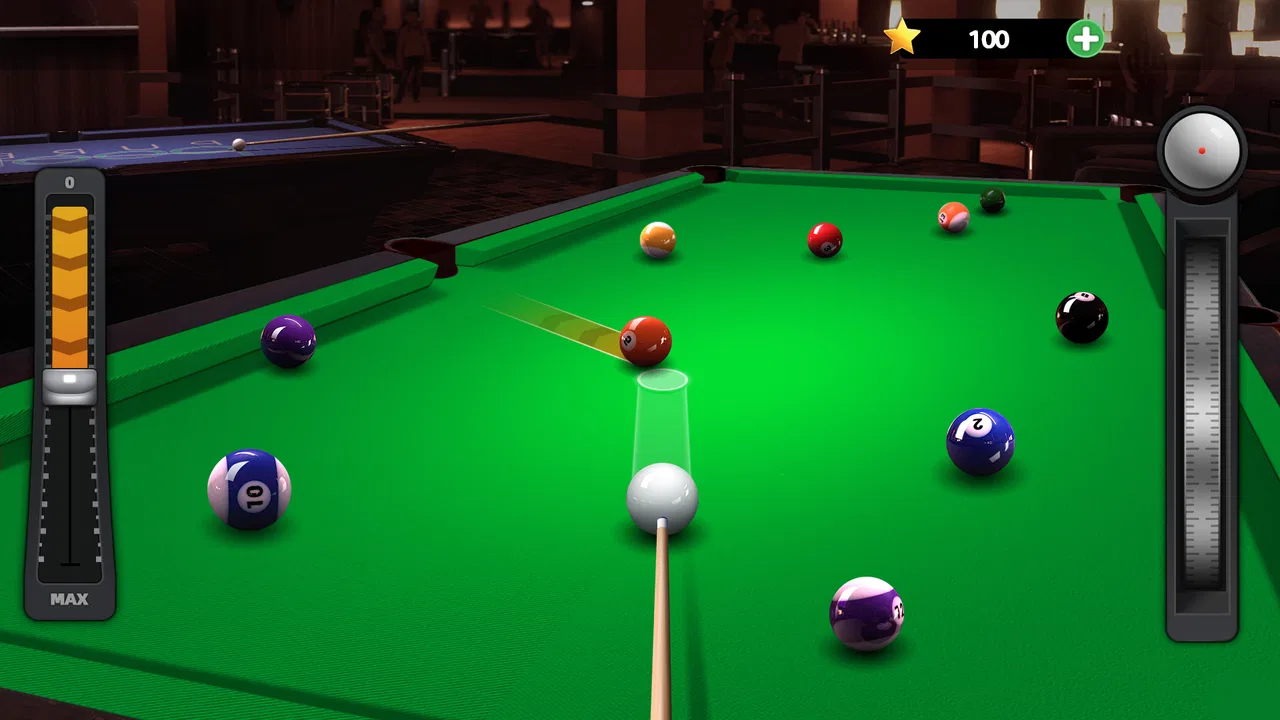
The first hurdle is not understanding what pool is; it is adjusting to how a touchscreen translates a physical cue and table into gestures. On a real table, I can make tiny changes to my stance, cue angle, and delivery. On a phone, every movement depends on how steadily I drag, where my finger covers the screen, and how much room I have to see the table. A shot that looks simple can therefore feel awkward until I stop trying to make large corrections.
My most useful early habit was to separate aiming from power. I first concentrated on the contact point and the intended path, then treated the strength of the shot as a second decision. Trying to do both in one rushed movement made my shots less predictable. This is a small change, but it matters because casual pool games often feel unfair only when the player is still combining several touch actions into one gesture.
Another common sticking point is overplaying the opening rounds. I initially wanted to clear the table quickly, but that encouraged aggressive shots with poor follow-up positions. A better approach is to use the first few turns to learn how the game responds to modest input. Notice how much movement comes from a short adjustment, how hard the cue ball travels with a restrained strike, and how much visual space remains available while aiming.
The best early objective is not winning every rack; it is building a repeatable touch. Once the same type of drag produces a similar result, the game becomes much easier to judge. That consistency is more valuable than attempting difficult shots before the controls feel natural.
Setup checks before blaming the game
Because this is a mobile game, I would begin with simple preparation rather than changing several settings at once. Make sure the device is running at least Android 6.0, which is the stated minimum operating system. If the game is being installed on an older phone or tablet, compatibility and performance can become the real source of frustration before the table itself gets a fair chance.
I also recommend closing demanding apps before playing, particularly on an older device. A pool table does not require the same kind of sustained processing as a large action game, but a crowded device can still produce delayed touches, stuttering animation, or a game that reloads unexpectedly. Those problems are easy to mistake for inaccurate controls because a delayed response changes the result of a shot.
Keep enough free storage for the installation and normal system activity, and use a stable connection when downloading or updating. The game is free, so the initial decision is easy, but free installation does not guarantee that every device will offer the same smooth experience. If the download pauses, the app closes during launch, or an update does not complete, I would first restart the device and retry on a reliable connection rather than repeatedly tapping the install control.
The current version is 1.2.7, and checking that the installed version matches the current release is a sensible first step when a problem appears after an update. I would also avoid restoring a session while several other apps are active. A clean launch gives the game the best chance to load its table and controls without competing for memory.
A practical control routine for the first few games
My recommended setup routine is deliberately simple. Start with a low-pressure match or opening session, look at the complete table before touching the cue, and identify both the target ball and the likely resting place of the cue ball. Then make a small aiming adjustment, pause, and only after that choose power. This creates a clear sequence instead of a frantic series of swipes.
For difficult shots, I found it more useful to plan the next position than to chase a spectacular pot. If the current ball can be pocketed in two ways, the safer path is usually the one that leaves the cue ball in a useful area for the following shot. That advice sounds like traditional pool strategy, but it has extra value on a phone because a controlled sequence gives you more time to confirm that your touch input is behaving as expected.
Players who are new to pool should also accept that a legal-looking shot may still be strategically poor. A successful pocket does not automatically mean the turn has been handled well. A cue ball left near a cushion, behind another ball, or at an awkward angle can make the next attempt much harder. I learned more by reviewing why the second shot became difficult than by focusing only on whether the first shot went in.
Recovering when a session goes wrong
When a shot produces an unexpected result, I would not immediately assume the game ignored the input. First ask whether the aiming line was changed while applying power, whether a finger covered part of the screen, or whether the device registered a longer drag than intended. Touchscreen control is sensitive to small differences, and the most useful recovery is often slowing down on the next turn.
If the game stops responding, closes, or returns to the start screen, the safe recovery path is to relaunch it and see whether the issue repeats. Restarting the device is worthwhile if the problem continues. I would not repeatedly force a shot or rapidly tap through menus, because that makes it harder to tell whether the issue is a temporary slowdown or a genuine repeatable fault.
For a match that feels damaged by an interruption, I prefer to treat the next launch as a fresh test rather than immediately changing every device setting. Play one short session with other apps closed. If the controls now respond normally, the earlier problem was probably related to the device state rather than the table mechanics. If the same failure happens again in the same part of the experience, record what you were doing and when it occurred before considering further steps.
This is also where expectations matter. A free casual game can be enjoyable without offering the deep recovery tools of a larger competitive platform. I would avoid assuming that every interrupted session can be restored exactly as it was. The practical choice is to protect your enjoyment by treating short sessions as the normal use case rather than investing a long uninterrupted block of time in every match.
When the app is not the cause
Pool games make device problems unusually visible because timing and touch placement affect every shot. A screen protector that changes finger glide, a damp display, a charging cable that makes the phone awkward to hold, or a notification appearing over the table can all make aiming feel inconsistent. Before judging the game, I would clean the screen, hold the phone in a stable position, and play without anything interrupting the display.
Performance can also vary with heat and battery condition. If the phone is warm, crowded with background tasks, or operating in a power-saving state, animation and input may feel less immediate. That does not necessarily mean the game has poor controls. Try a short session after the device has cooled and after unnecessary apps have been closed. The comparison is more useful than changing your technique after every missed shot.
Network conditions deserve the same caution when an online-looking part of the experience takes longer to load or behaves unpredictably. A weak connection can make a game appear frozen even when the phone itself is working normally. I would switch to a steadier connection, wait for the launch process to finish, and avoid repeatedly restarting during an active load. The goal is to isolate one variable at a time.
There is also a human factor: pool is a precision game, and frustration exaggerates perceived inconsistency. After several missed shots, I tend to swipe harder and make larger corrections, which creates a genuine decline in accuracy. Taking a short break is not just general advice; it directly improves the quality of the test. If the game feels better after returning with a calmer hand, the earlier problem was partly play style rather than software.
How it fits into everyday use
I can see this game working well during a short break, while waiting for an appointment, or when I want a familiar sports activity without committing to a long campaign. The simple premise makes it approachable for someone who already knows eight-ball rules, and the 3D presentation gives the table enough visual presence to make ordinary shots feel more engaging than a flat puzzle.
A realistic use case is a few rounds after dinner with a phone passed between friends. One person can take a turn, hand over the device, and keep the focus on shot selection rather than learning a large set of controls. It also works for solo practice when the goal is to improve basic alignment and power judgment. I would keep those sessions short, though, because mobile pool can become repetitive if you expect a deep progression system or a large variety of modes.
The Teen content rating is worth considering for families choosing games for younger players. It means I would not automatically place this in the same category as a child-focused title. Parents should check the experience on the intended device and decide whether the rating fits their household. For older players, the rating is unlikely to be a concern, but it is still useful context when sharing a phone or tablet.
What it does better than the usual alternatives
Compared with a physical table, the obvious benefit is convenience. There is no need for space, equipment, or another player standing nearby. Compared with a highly detailed pool simulator, its value is likely to be the shorter path from opening the game to taking a shot. That makes it a reasonable choice for casual players who want recognizable pool rather than a lesson in advanced cue sports.
On the other hand, a dedicated simulator is usually the better option for players who care about fine-grained realism, tournament depth, or a more serious long-term practice routine. A physical table remains better for learning the feel of cue delivery, judging real-world angles, and developing habits that depend on body position. Classic Pool 3D: 8 Ball sits between those choices: more convenient than real pool and more immediately accessible than a demanding simulation, but not a substitute for either at its strongest.
The free price lowers the risk of trying it, especially if you only want an occasional table game. Still, free games can be less appealing to people who dislike interruptions, repeated progression, or the general compromises that come with a casual mobile format. I would recommend trying it with modest expectations rather than assuming that its large install base means it will match every player’s preferred style.
Who should install it, and who should skip it
I would recommend it to someone who wants a straightforward 3D pool game, already understands the basic aim of eight-ball, and values quick access over a highly technical simulation. It is also a sensible first experiment for a casual player who does not want to pay before deciding whether mobile pool is enjoyable.
I would be more cautious if your main goal is competitive ranking, detailed training, or exact professional-style physics. In that case, another pool game with a stronger emphasis on simulation or structured competition may suit you better. I would also skip it if touchscreen aiming regularly frustrates you and you have no interest in spending a few rounds learning the input rhythm. The game cannot remove the basic limitation of playing precision pool with a finger on a small screen.
Players on older hardware should test it patiently rather than judging it from one failed launch. The minimum operating system is Android 6.0, but operating-system compatibility alone does not guarantee equally smooth performance across every device. A clean installation, a restart, and a short controlled session are enough to make a fair initial assessment.
My practical verdict after using it as a casual pool table
Classic Pool 3D: 8 Ball succeeds when I treat it as a convenient pick-up-and-play sports game. Its familiar subject, free access, and simple touch-based rhythm make it easy to recommend to a friend who wants a few relaxed rounds. The developer, C.C.T Games, has positioned it in a crowded category, so its strongest selling point is not specialist depth; it is the ability to get a recognizable pool experience onto a phone without much ceremony.
The limitations are just as important. Touch controls need a period of adjustment, device performance can affect how fair the game feels, and players seeking a complete competitive or simulation package may outgrow it. The average rating of 3.7 reflects that middle ground: plenty of people find the concept worthwhile, while others may want smoother consistency or more depth than a casual mobile table provides.
My advice is to install it when you want short, low-commitment pool sessions and are willing to learn the controls through measured shots. Keep the screen clean, close unnecessary apps, separate aiming from power, and troubleshoot interruptions methodically instead of assuming every miss is a software fault. If that style suits you, this free release is an easy game to keep available for spare moments. If you want serious training or a highly structured billiards experience, I would look toward a more specialized alternative instead.
In the end, Classic Pool 3D: 8 Ball is most convincing as an accessible digital table rather than an all-purpose pool simulator. I enjoyed it more when I focused on careful positioning and short sessions, and I think that is the fairest way to approach it. It is a practical choice for casual sports-game fans, with enough familiar pool strategy to reward attention, but its touchscreen format and mobile limitations should remain part of the decision.
FAQs for Classic Pool 3D: 8 Ball
01What are the main features of Classic Pool 3D: 8 Ball?
Classic Pool 3D: 8 Ball offers a realistic pool experience with stunning 3D graphics. The game features multiple modes, including single-player and multiplayer options, allowing you to compete against friends or AI opponents. Customizable cues and tables enhance gameplay, while intuitive controls make it accessible to beginners and seasoned players alike.
02Is Classic Pool 3D: 8 Ball free to play?
Yes, Classic Pool 3D: 8 Ball is free to download and play. However, it offers in-app purchases for additional features, like premium cues or exclusive tables. While purchases can enhance your experience, they are not necessary to enjoy the core gameplay. Be mindful of optional spending, especially if kids have access to your device.
03Does Classic Pool 3D: 8 Ball require an internet connection?
Classic Pool 3D: 8 Ball can be played offline in single-player mode, which is great for practice and honing your skills. However, an internet connection is required for multiplayer mode, leaderboard updates, and accessing certain features. Playing online enhances competitive play, allowing you to challenge players worldwide.
04What devices are compatible with Classic Pool 3D: 8 Ball?
Classic Pool 3D: 8 Ball is compatible with most modern Android and iOS devices. It requires a minimum operating system version, typically Android 5.0 or iOS 10.0 and above. Ensure your device meets these requirements to enjoy smooth gameplay. Check the app store for specific compatibility details for your device.
05Are there any ads in Classic Pool 3D: 8 Ball?
Yes, Classic Pool 3D: 8 Ball contains ads, which support the free version of the game. While ads can be occasional interruptions, they are generally short and can be removed through an in-app purchase. This option enhances the gaming experience by allowing you to play uninterrupted, focusing solely on your pool skills.
Pros
- Realistic physics enhance gameplay.
- Intuitive controls are easy to master.
- Variety of game modes available.
- Multiplayer option for competitive play.
- Vibrant graphics and sound effects.
Cons
- Ads can disrupt the game flow.
- Limited customization options.
- In-app purchases can be pricey.
- Occasional lag in multiplayer.
- No offline mode available.

Classic Pool 3D: 8 Ball
Gallery